
Dallas County Sheriff Serves Mental-Illness Warrants
Within the Sheriff's Warrant Execution Section, mental-illness warrants and high-risk service sit among the listed duties. That work is separate from the Dallas County Wanted list the public sees. It is separate, too, from the court's call to issue or recall any warrant. For an open case, ask the issuing court about the order itself. Bring service questions to the Sheriff. A general search entry alone will not tell you how Dallas County officers handle one particular warrant. The Sheriff Warrant Execution Section's official duties spell out the section's role.
Arrest Warrants in Dallas County
An arrest warrant is a written order telling a peace officer to bring a person before a magistrate. In Dallas County, the judge or magistrate reads a sworn complaint or affidavit and decides whether probable cause supports the order. Felony matters usually run through a District Court or a magistrate. Misdemeanor and Class C cases may sit in County Criminal, JP, or municipal court instead. The clerk keeps the court file. Service may go to the Sheriff or another peace officer. A warrant flag in the county public search can hint at trouble, but it is not the signed order, and it will not show every unserved case in Dallas County.
Dallas County Arrest Warrant Issuance Follows a Local Court Chain
The chain starts with a peace officer, prosecutor, or authorized complainant who supplies sworn material. A judge or magistrate then reviews those facts, signs an order when the legal standard is met, and the clerk routes it to the agency that will enter and serve it. At Lew Sterrett, magistrates also run initial appearances and bond functions. For felony records, begin with the District Clerk felony section. The county says it supports seventeen felony District Courts. The Sheriff's line answers county service questions, yet the judge or assigned court still controls the case and bond. A jail search helps only after booking. It is no substitute for a warrant check on unserved Dallas County arrest warrants.
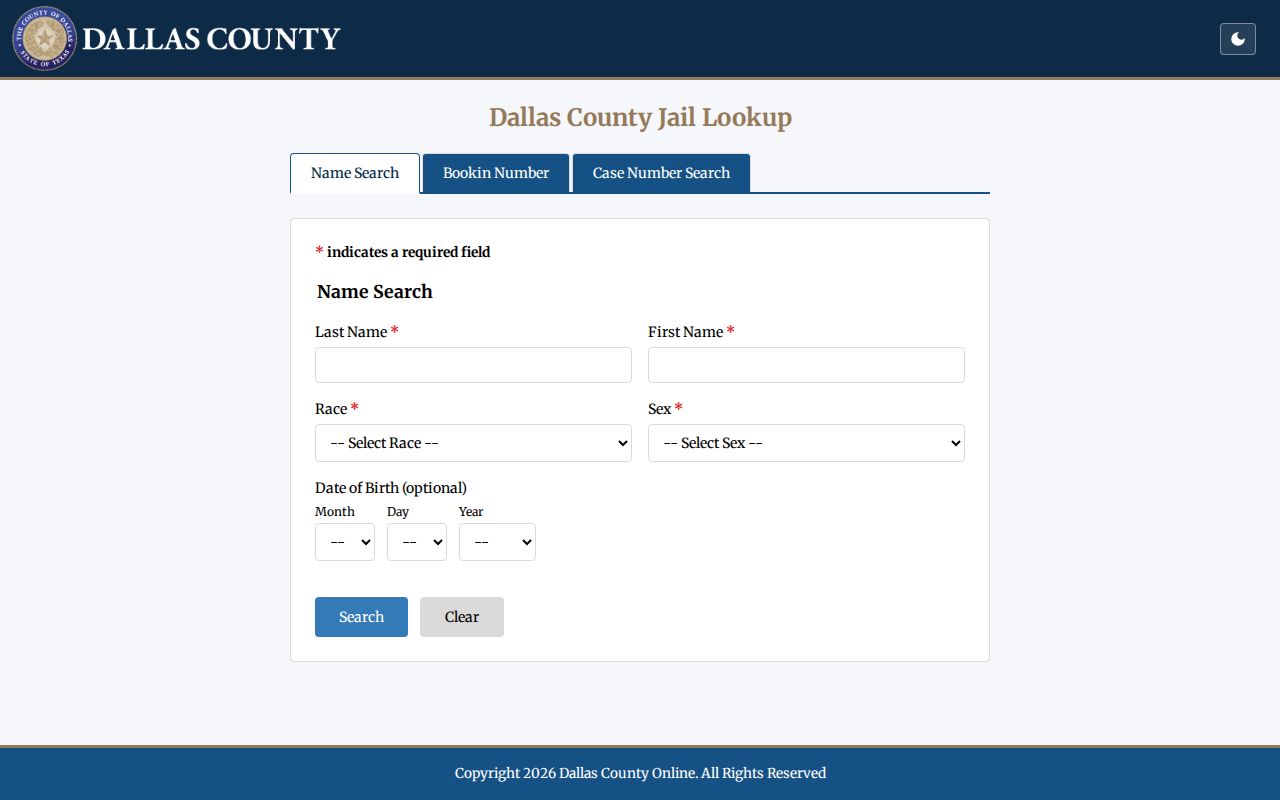
After booking, the Dallas County jail lookup can show charge, bond, holds, and the bond-valid time.
What a Dallas County Arrest Warrant Contains
A warrant and its case record may name the issuing court, the judge or magistrate, case and warrant numbers, the issue date, the offense, and the serving agency. A jail record can add a bond amount, a hold, or a "bond amount valid as of" time. Dallas County runs no single public warrant-number format across felony, county, JP, and city systems.
| Warrant number | Use the number printed by the issuing court; it may differ from the cause number. |
|---|---|
| Named person | Confirm identity with the court before relying on a similar name. |
| Charge or offense | The case allegation or statutory offense connected to the order. |
| Issuing judge / court | Names the authority that controls the warrant and recall. |
| Bond or hold | May show cash, surety, PR, no-bond, or another hold; confirm with the court. |
| Issue date | Helps identify timing, but an online date may not show later court action. |
Dallas County Arrest Warrants and Affidavits Become Public After Execution
Texas Code of Criminal Procedure Article 15.26 governs public access to an arrest warrant and its supporting affidavit once the warrant is executed. That timing rule does not make every unserved warrant visible in a portal. An active investigation or another confidentiality rule can still block a copy or redact parts of the file. For a court copy, ask the clerk who keeps the case. For an agency's service report, ask the agency that wrote it. A Sheriff request will not produce a Dallas Police report or a city court order. Dallas County requesters should name the exact record they want. The official Texas Code of Criminal Procedure sets out the rule.
How Dallas County Arrest Warrants Are Served
The Sheriff's Warrant Execution Section tracks wanted people across Dallas County, serves mental-illness warrants, and handles forced entry or high-risk service for local and federal agencies. Constables serve process tied to their precinct duties. City police and marshals work warrants inside their own municipal systems. The case and the issuing agency decide who carries the order. After an arrest comes booking, identity and medical screening, magistrate review, and a bond decision. A jail profile may show holds from other agencies, so posting one bond does not always mean walking free. The Frank Crowley contact page helps you find the county court buildings. The Sheriff's Warrant Execution Section duties describe its public service role.
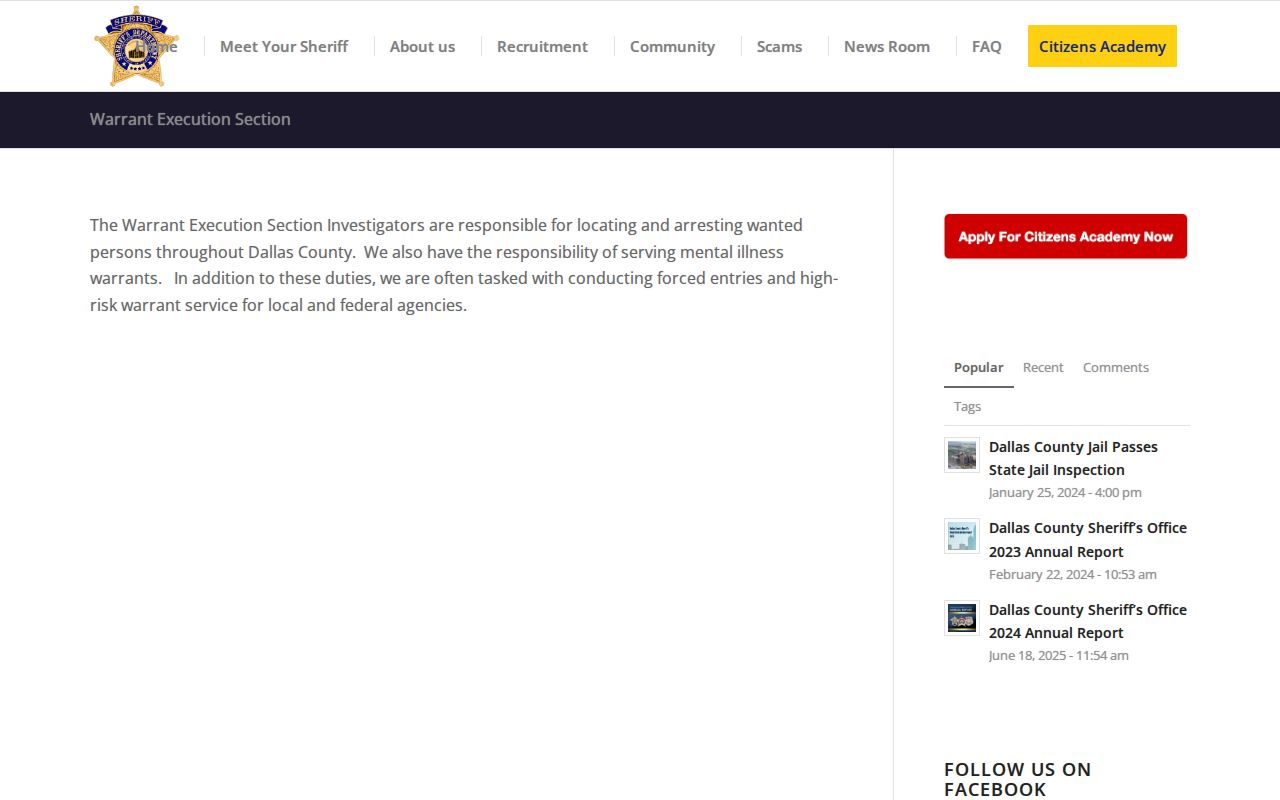
The Dallas County Sheriff's section serves warrants; the underlying charge and any recall stay with the court.
Dallas County Sheriff, Constable, and City Police Service Differ
Who serves a warrant depends on the court and the assignment. The Sheriff works countywide and can back up local or federal agencies. Constables serve process tied to JP precincts, while city police and marshals handle municipal matters. A public list may say "warrant" without naming every officer or showing how service was attempted. A federal warrant is another world entirely. It belongs to a federal court with its own service path. The Northern District of Texas and U.S. Marshals are not part of the Dallas County Sheriff, so the county line is no federal case lookup. Use the county directory to route a local court or agency question.
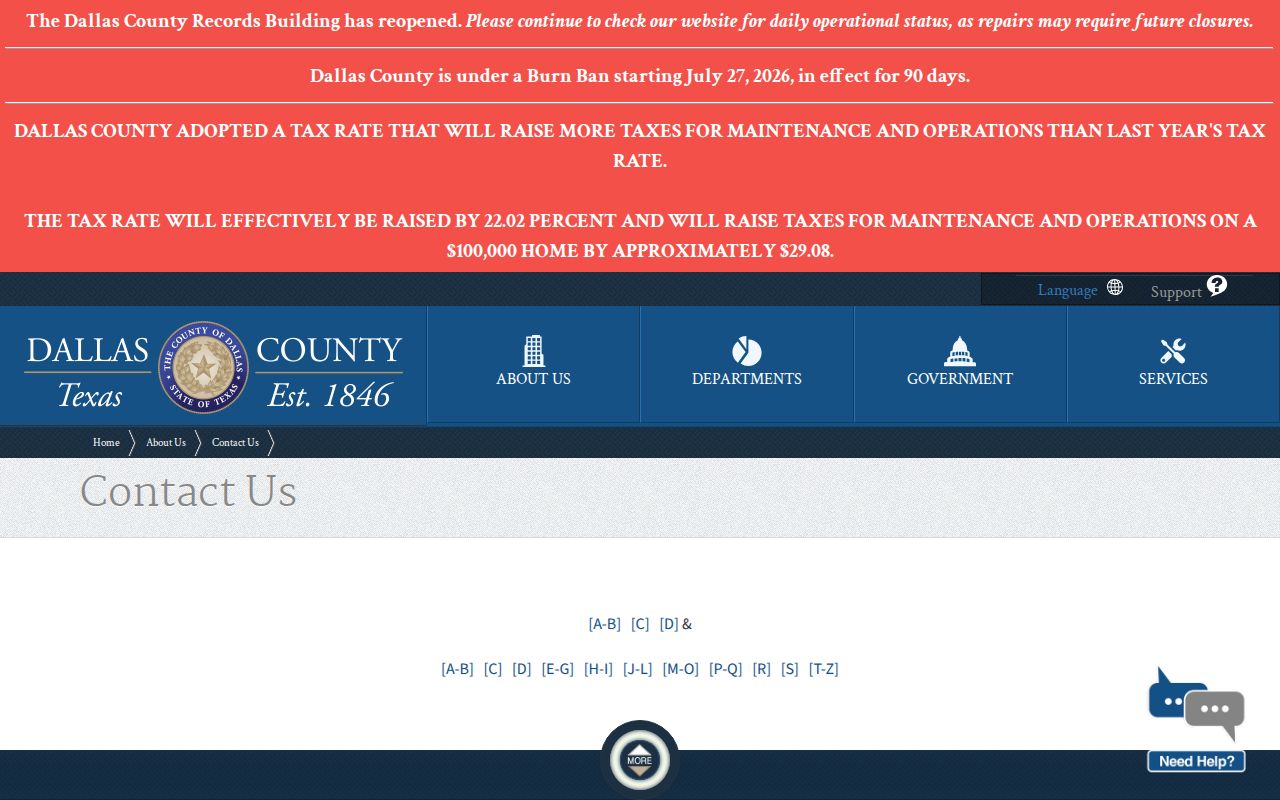
The Dallas County building directory lists county offices; the case notice names the specific court.
Arrest Warrant vs Summons vs Bench Warrant
Three papers can bring someone into Dallas County court, and they work differently. An arrest warrant lets officers take a person to a magistrate once probable cause exists. A summons simply orders the person to show up, with no custody attached. Miss a required hearing in an open case, and a bench warrant follows. The court file or the notice itself should say which one applies, and the Dallas County bench warrant details cover the missed-setting routes.
| Feature | Arrest Warrant | Summons | Bench Warrant |
|---|---|---|---|
| What it orders | Arrest and presentation to a magistrate. | Appear on the stated date. | Bring the person before the judge after a missed duty. |
| Basis | Probable cause under the criminal process. | Authorized charging or court process. | Failure to appear or comply with an existing case. |
| Who issues it | Judge or magistrate. | Court or authorized officer. | Judge overseeing the case. |
| How to respond | Ask about counsel, bond, and planned appearance. | Contact the court and appear as directed. | Ask the issuing court about recall or reset. |
Dallas County Arrest Warrant Questions Need the Issuing Court
A county warrant list is only a starting point. Someone who suspects a Dallas County arrest warrant should call the Sheriff's line and ask whether a service entry exists, then go straight to the issuing court for the file, the bond amount, and the next appearance date. That part matters. A city case or a federal matter runs through a different office entirely, so the county's records will not answer for it. If the person is already in custody, Dallas County's jail lookup shows the charge, warrant number, bond amount, and any holds. A blank result proves nothing, though. Someone not listed can still have an unserved warrant out there. Keep a copy of any court order, and ask the clerk when the public record and the law-enforcement entry will catch up with it.
What to Do If There Is a Warrant for You
Start with a phone call, not a trip to a counter. A lawyer or the issuing court can say whether a walk-through, a planned surrender, a bond, or a motion to recall fits the situation, because Dallas County has no single walk-in window that handles every felony and misdemeanor warrant. If surrender is the advice, nail down the office, the accepted bond method, and the documents to bring, and ask whether another agency's hold could block release even after bond is posted. The court can also tell you whether counsel may appear at the hearing without you. Posting bond secures appearance or clears an immediate hold. It does not dismiss the case. Keep the signed order, the bond receipt, and the next court date together, then ask which office reports the clearance to local systems and give those updates time to land.
Important: Speak with a lawyer or the issuing court before appearing; an arrest warrant may be enforced during contact with law enforcement.