
Dallas County Family-Court Capias and Bench Warrants Follow a Different Rule
A child-support enforcement matter can use a capias under Texas Family Code Chapter 157. That process differs from a municipal or JP capias pro fine for an unpaid Class C judgment, so do not treat a support order like a citation balance.
Check the family-court papers and ask the issuing court about the required appearance or release terms. The District Clerk can route a request for an existing felony or district-court record, but only the court handling the support matter can explain its order.
Read Texas Family Code Chapter 157 for the state procedure.
Bench Warrants in Dallas County
A Dallas County judge may issue bench process after a missed setting, failure to appear at trial, contempt, or a breach of a court order. A municipal or JP court can use an alias warrant when someone never makes an initial appearance after a citation. A capias pro fine follows a judgment that remains unpaid; that is a different stage and may have different options.
Identify the court and citation before calling. District Court handles felony matters, County Criminal Courts handle county misdemeanor cases, and JP or municipal courts handle many traffic and Class C citations. Family support process follows its own assigned family court.
The Dallas County JP 4-1 Warrant Rule Requires an In-Person Step
Justice of the Peace 4-1 publishes a specific rule for traffic and Class C matters: when a case is already in warrant status, a person must appear in person to enter a plea or pay a judgment. The JP court directory lists ten precinct courts, so the citation’s court name matters more than a general Dallas County search.
Call the court before going. Ask whether the case needs a plea, payment, reset, or judge’s review, and whether the person should bring identification or a receipt. An online payment page may accept a case number without changing a warrant immediately.
Use the JP 4-1 criminal and traffic instructions for the published rule.
How a Dallas County Bench Warrant Is Issued
The judge overseeing a case can issue a warrant after a required appearance or court condition is missed. The court records the order and sends it for service or entry by the responsible Sheriff, constable, city police, or marshal. The issuing judge, not the serving office, decides whether to recall the warrant, set a new date, or require bond.
Texas offers no public index that combines active warrants from every court. The District Clerk, County Clerk, JP clerk, or city municipal clerk may keep the case record, while law enforcement maintains service information. A county list can lag behind those offices.
Dallas City Capias Hearings Can Use Virtual Court
Dallas Municipal Court allows virtual hearings for certain Show Cause, Adjudication, Capias, Juvenile, and Civil Citation matters. That option does not apply to every missed setting: the city says pretrial, bench, and jury trials require in-person attendance. Ask the court to confirm the case type and current setting before relying on a remote link.
A virtual capias or show-cause hearing is a Dallas city procedure. It cannot recall a Dallas County District Court or another municipality’s bench warrant. The city’s virtual hearing instructions identify the covered matters.
The city court page frames the hearing channel and case categories.
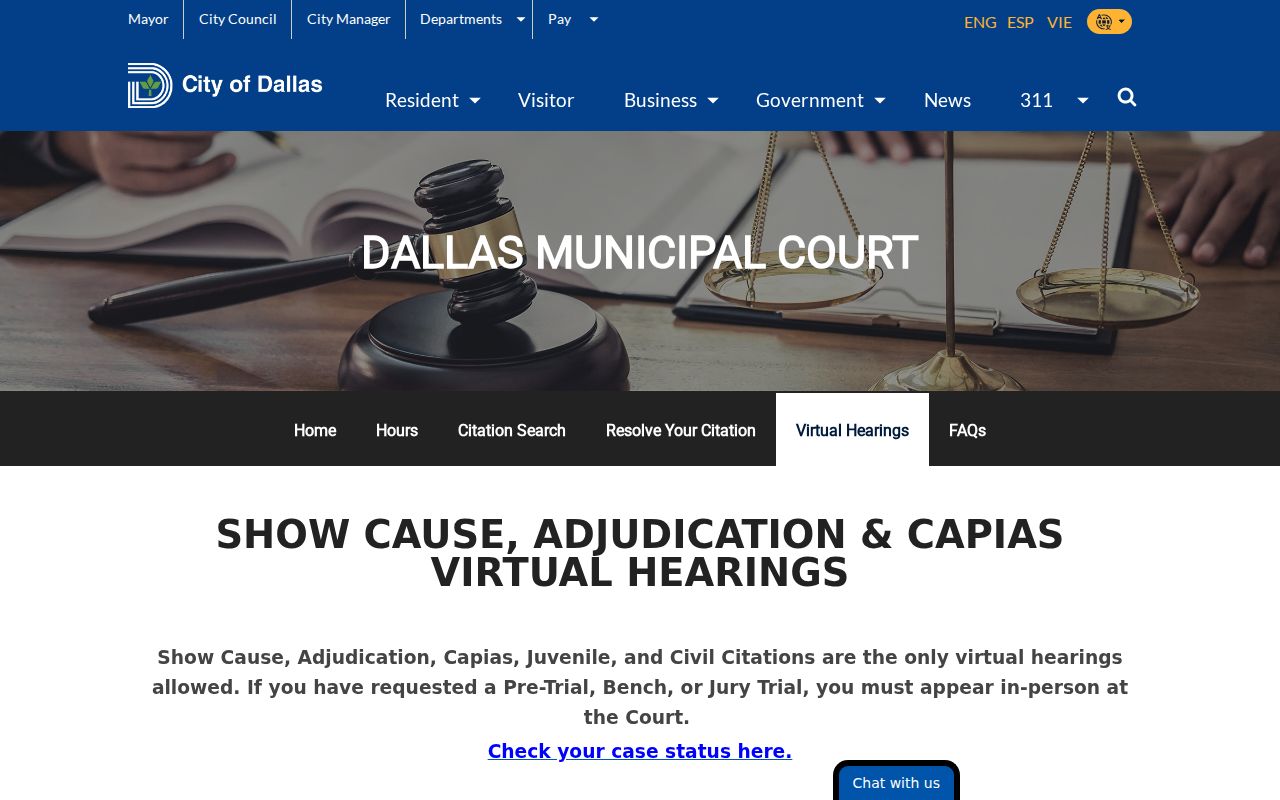
Check the current notice for the specific case rather than assuming all warrants can be handled online.
Dallas County Bench Warrant vs Arrest Warrant
A bench warrant responds to a court duty that was missed. An arrest warrant follows a judge’s or magistrate’s probable-cause review of an alleged offense. Both can lead to arrest, but they arise for different reasons and link to different records. A new setting or recall may resolve bench process without ending the underlying case. See the separate Dallas County arrest warrant process for probable-cause warrants.
| Feature | Bench Warrant | Arrest Warrant |
|---|---|---|
| Trigger | Missed court duty, contempt, or court-order breach. | Probable cause reviewed by a judge or magistrate. |
| Who issues it | Judge overseeing the existing case. | Judge or magistrate on an authorized complaint. |
| Case link | Usually an existing case or citation. | Criminal charge supported by sworn material. |
| Next step | Ask about recall, reset, appearance, or bond. | Confirm service and bond with the court or agency. |
Mesquite Walk-In Court Requires the Clerk’s Final Signature
Mesquite offers a standing walk-in docket on Wednesday, Thursday, and Friday, except holidays. Check-in closes at 8:55 a.m. for the 9 a.m. docket at 211 Municipal Way. The judge can consider a plea, trial request, due-date extension, payment plan, or ability-to-pay alternative for a Mesquite case.
After the hearing, the person must sign the order at the clerk window. The court warns that skipping this last step can lead to an arrest warrant. This city docket cannot clear another Dallas County court’s bench warrant.
Current instructions are on the Mesquite Walk-In Court page.
How to Resolve a Dallas County Bench Warrant
Do not start with a payment guess. Confirm the type, court, and required step, then ask whether an attorney can arrange a reset, walk-through, or motion to recall. A capias pro fine after judgment may call for a payment plan, court-approved alternative, or hardship review instead of an ordinary bond.
- Match the case number to the municipal, JP, County Criminal, or District Court.
- Ask the clerk or coordinator whether a motion, lawyer, appearance, bond, or payment is required.
- Confirm the approved place and method before making an appearance.
- Keep the signed order or receipt, then ask when the warrant entry will update.
Caution: A payment receipt may not satisfy an appearance order; ask the issuing court whether the warrant was recalled and a new date is set.
Dallas County Bench Warrant Recall Belongs to the Issuing Judge
The Sheriff or a constable may serve a warrant, but neither can replace the judge’s recall order. A felony case routes through the District Clerk’s felony records and the assigned District Court. A county misdemeanor uses the County Clerk’s Criminal Courts Division. JP and city tickets belong with the court named on the citation.
The Dallas County record-search hub links the clerk systems, and the District Clerk page describes its felony records role. The correct clerk can identify the judge or coordinator, but the judge decides whether to recall or reset the matter.
See the District Clerk felony record information and county court directory before filing.
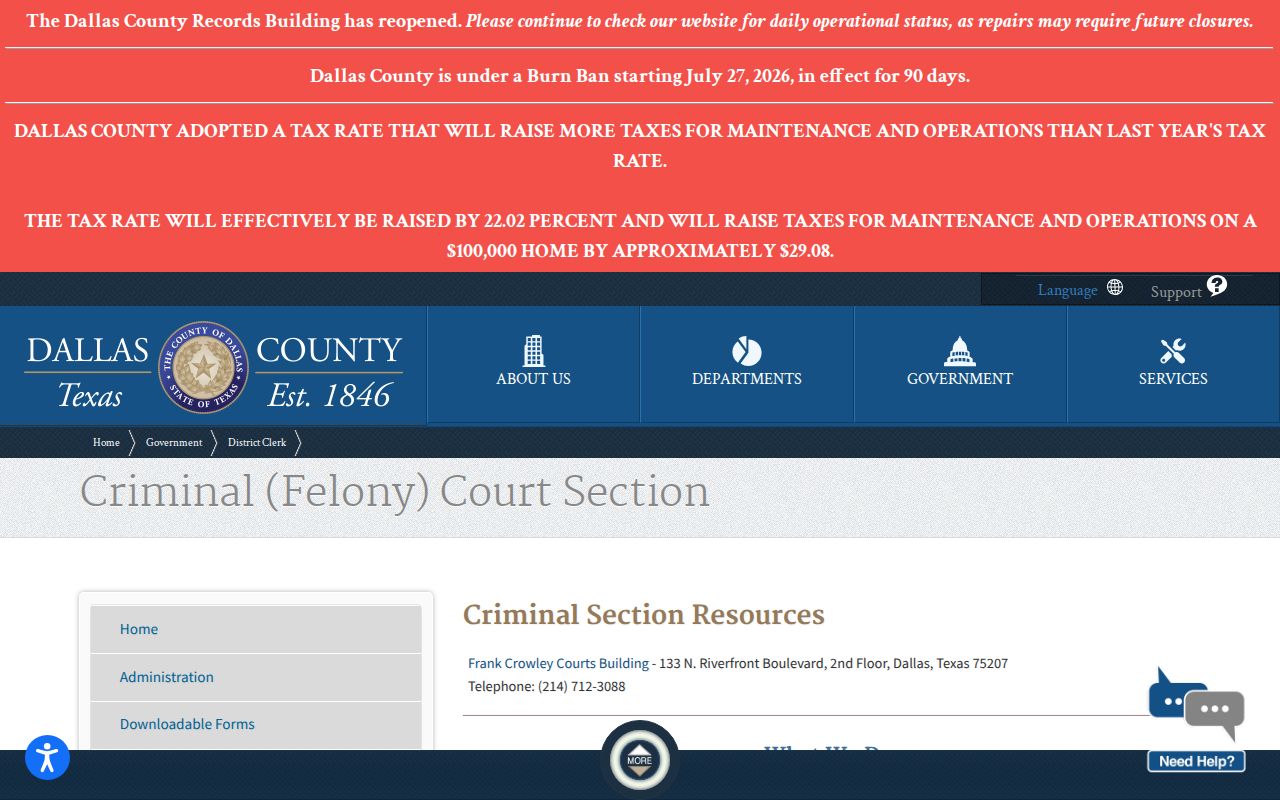
Felony file questions belong with the clerk, while warrant service questions may need the Sheriff.
Which Dallas County Court Issued It
The citation or docket notice is often the fastest route to the court. Dallas County has seventeen felony District Courts, County Criminal Courts for misdemeanors, ten JP courts for many traffic and Class C cases, and municipal courts for city ordinances and tickets. A family-support capias belongs with its assigned family court.
Use a Dallas County warrant search as a starting point, then contact the named clerk. The Sheriff can explain a county service entry, but the issuing judge decides recall, reset, and bond requirements.