
Dallas County JP 4-1 Requires an In-Person Warrant Step
JP 4-1 directs a person with a warrant-status issue to enter a plea or pay in person. The online payment page requires a case number, may not show every unpaid citation, and does not stop enforcement before a payment posts.
Check the precinct printed on the citation and contact that court before using a payment screen. JP 4-1 procedures do not apply to a city Municipal Court ticket.
Use the JP 4-1 criminal court page for its current instructions.
Traffic Warrants in Dallas County
A Dallas city criminal citation generally calls for a court appearance within 21 days; a civil citation has a 31-day deadline. JP 4-1 says a missed date can lead to an arrest warrant. If a judge has entered a fine and the obligation remains unpaid, a JP or city court may issue a capias pro fine under Texas Chapter 45A.
The ticket tells whether the case belongs to Dallas Municipal Court, another city court, or one of the ten Dallas County Justice of the Peace courts. That venue controls the warrant, payment, and hearing route. A county Sheriff search is an added check, not a substitute for the citation court.
The Dallas City Citation Deadline Starts the Traffic Warrant Timeline
Dallas Municipal Court gives 21 days to respond to an ordinary criminal citation and 31 days for a civil citation. Missing a required date can create a failure-to-appear case and warrant. A missed deadline does not tell a person which payment or appearance route is now open; the court must confirm the case status.
JP 4-1 separately warns that a failure to appear can lead to an arrest warrant. When its system says warrant status, the page directs a person to appear in person to enter a plea or pay a judgment. This is a county precinct rule, not a rule for every city citation.
See the Dallas citation deadline guidance and the JP 4-1 warrant instruction.
How to Check for a Dallas County Traffic Warrant
Read the citation to identify the court, then use that court's search or clerk. Dallas city search accepts citation number, name plus date of birth, docket number, or police case number. Dallas County JP online payment requires the case number. Grand Prairie accepts citation or warrant number, driver's-license number, name and date of birth, or plate. Garland, Irving, and Mesquite each use their own municipal channels.
- Search the issuing city's portal or the JP court named on the ticket; try the citation number first.
- For Dallas city, use the official Citation & Docket Search; a warrant result appears in red.
- Call the court or Sheriff at (214) 761-9026 if the portal is unclear; the Sheriff line is not a city-court substitute.
- Request an existing citation or warrant record from the city or JP clerk if a search cannot answer the question.
- Use DPS FTA/FTP only to check a reported renewal hold; call the issuing court about the warrant itself.
Dallas City Warrants Appear in Red in the Citation Search
The Dallas Municipal Court search accepts a citation number without its dash, a name with date of birth, a docket number, or a police case number. The “similar-sounding names” option can help with spelling differences. A new citation may take up to ten business days to appear, so a recent ticket can be absent at first.
The red display signals warrant status in that city system. It does not confirm a county JP case or another city's warrant. Call Dallas Municipal Court at (214) 670-0109 for a status question, then ask whether payment, bond, or a new court setting is required.
The city’s Citation & Docket Search page explains the search fields and display.
What a Dallas County Traffic Warrant Shows
A traffic entry may show a citation or case number, court, offense description, payment information, court date, and a warrant indicator. Cities label and display these fields differently. A visible amount can be a fine or balance, not bond. Use the exact citation number to ask the court what the amount represents.
| Citation number | C-00000000 is an example format only; use the number on the actual notice. |
|---|---|
| Offense or reason | A citation description, not a final court finding. |
| Issuing court | Municipal Court or the named Dallas County JP court. |
| Amount | Fine, cost, or balance may differ from a court-set bond. |
| Status and date | Read with the court's latest case record and hearing notice. |
Dallas County JP Payment Can Take Three to Six Business Days to Post
The Dallas County JP payment page requires a case number and warns that online payment may take three to six business days to post. A warrant can remain enforceable during that interval. If the case is already in warrant status, call the JP court before assuming an online transaction lifted it.
Dallas city and each municipality have separate payment and appearance rules. Keep the receipt, ask when the court will update its record, and confirm whether a new hearing or bond remains due.
Review the Dallas County JP payment instructions before submitting a case payment.
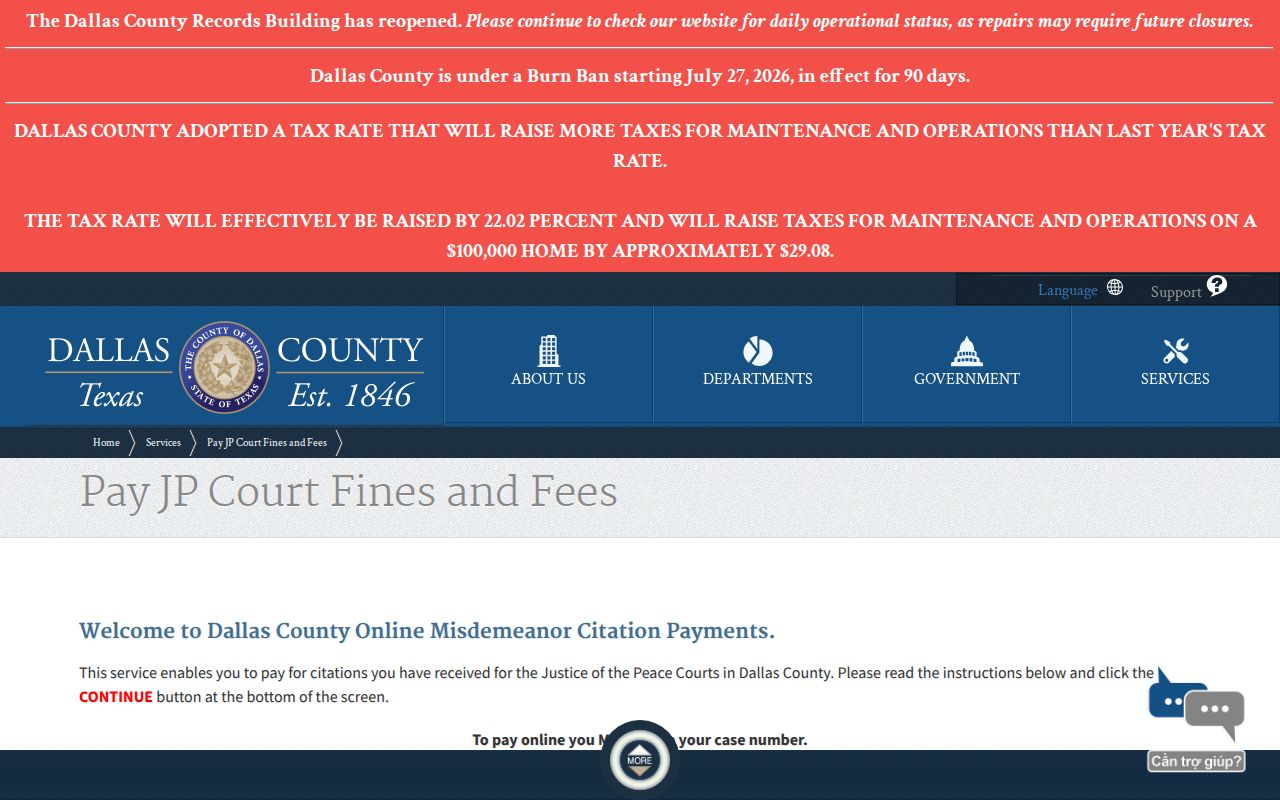
The page warns that posting takes time and does not display every unpaid citation.
Paying or Lifting a Dallas County Traffic Warrant
Ask the issuing court whether the case permits full payment, a plan, a new setting, a not-guilty cash bond, or an in-person plea. Dallas city also allows eligible deferred disposition, motions, and walk-in Proof/Plea routes. A paid fine and a bond serve different purposes. Some motions must be filed in person or by mail, not by phone, email, or fax.
- Confirm the amount, court, and whether the warrant requires an appearance.
- Use only the payment method the court authorizes for that case.
- If contesting, ask whether a cash or attorney bond is needed to set a hearing.
- Keep the order or receipt and confirm the warrant and any reported hold were updated.
Warning: Do not assume that sending a payment clears a warrant at once; ask the court when its record and any state hold will update.
Dallas County OmniBase Holds Are Not Traffic Warrants
Texas DPS Failure to Appear/Failure to Pay and OmniBase handle reported citation information that may block license renewal. DPS says license specialists cannot confirm whether a warrant exists. The issuing court must resolve the citation and send its update. DPS reports that a cleared item may take up to seven business days to change.
Dallas city stopped sending new license holds for citations issued after November 1, 2021, though older reported holds may remain. That local change does not apply to every Dallas County city or JP court.
See the JP payment route and the official DPS FTA/FTP FAQ.
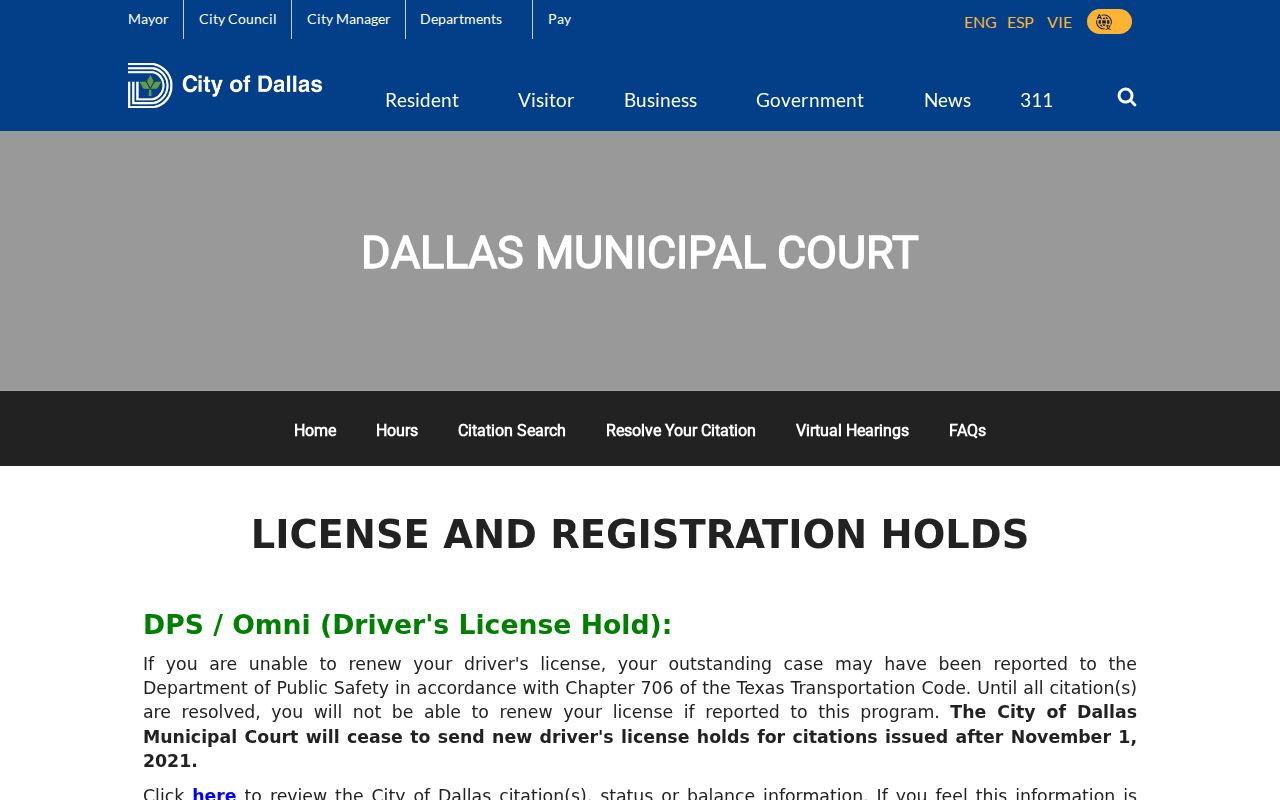
The DPS channel reports a license hold and leaves warrant status with the issuing court.
For a county precinct citation, review the JP 4-1 criminal court instructions before going to the counter.
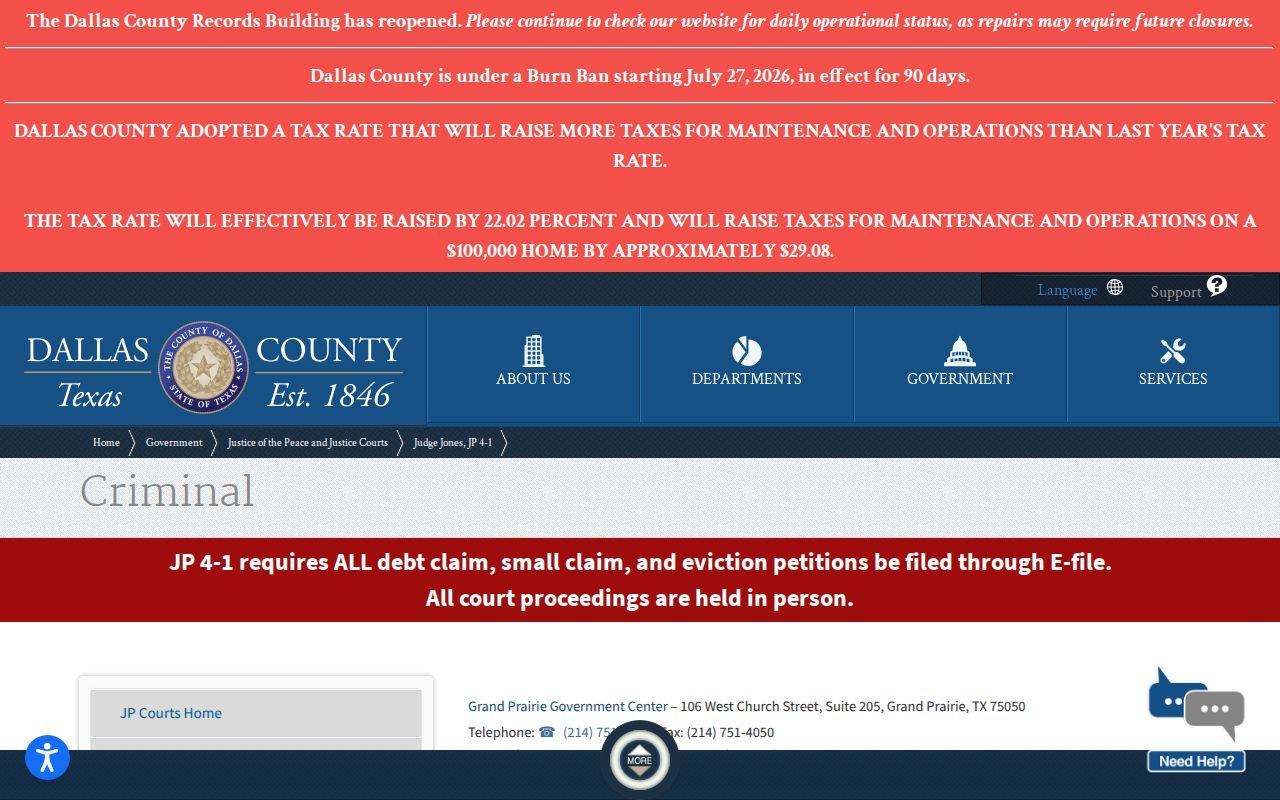
JP 4-1 describes its own appearance and payment route for precinct matters.
Traffic Warrant vs FTA and License Holds
One ticket can create related but separate records. The court issues a warrant or capias; an FTA or FTP report may reach DPS; and a local registration block may have its own rules. Resolve each item with the agency that controls it. A license-renewal hold is not proof of a current arrest warrant, and a cleared warrant may not remove another court’s report.
| Mechanism | What Triggers It | What It Does |
|---|---|---|
| Traffic warrant | Missed appearance or unpaid judgment. | Court order tied to a citation or case. |
| FTA / FTP report | Court reports a missed appearance or payment. | May affect license renewal through DPS. |
| Registration hold | Local scofflaw status for an eligible past-due amount. | May block registration; separate from bond and warrant status. |